The Innovators Film Festival is a global celebration of student filmmakers who treat technology as an instrument of story rather than a substitute for it. Presented by the Loyola Marymount University School of Film and Television and staged on the LMU campus in Los Angeles, it was conceived as a first-of-its-kind event, a festival where narrative leads and technology serves, and where the next generation of filmmakers is connected directly to the studios, networks, streamers, agencies, and technology companies that can launch their careers. It is the rare festival that treats the arrival of generative tools not as a threat to be managed but as a new grammar to be celebrated, provided the grammar is put in service of something worth saying.
My role was Festival Director, and in practice that meant producing the event from concept to closing night alongside its co-founder Justin Winters. The work spanned everything a festival requires and rarely advertises, the programming and the jury, the awards and the panels, the sponsorships and the partner decks, the brand identity and the marketing, the venue logistics and the run of show, the submission pipeline and the night-of production. A festival is a film studio compressed into a single weekend, every department running at once with no second take, and this one was built and run end to end as that kind of operation.

01What the festival is
The submission rules tell the story of its ambition. Films run one to five minutes and must incorporate at least one aspect of modern technology to enhance the storytelling or the production, whether that is script development, generated imagery, synthetic voice, an original score, motion graphics, or the edit itself. The festival is open to student filmmakers from accredited institutions anywhere in the world, judged on creativity, narrative strength, technical execution, and the inventiveness of the technology in service of the story. Every submission carries a short behind-the-scenes piece in which the filmmaker explains what inspired the concept, why this story and why now, and which tools made the vision possible. That insistence on transparency is the festival's quiet thesis, that the future of filmmaking is not a secret to be hidden but a craft to be taught in the open.
02What I produced, soup to nuts
The festival was run as a complete production rather than a curated screening. Programming meant assembling the slate of selected films and the panels around them. The jury and the awards meant recruiting judges, defining categories, and designing the ceremony. The partnerships meant building the sponsor and partner decks and bringing studios, agencies, and technology companies to the table, including a sponsor raffle and the strategic relationships that give a young festival its credibility. The marketing and social media were mine to own end to end, the brand board and the poster, the flyers and the merchandise, and the social campaign that built the audience and filled the room. The operations meant the venue agreement, the theater specifications, the master RSVP, the run of show, and the expenses, and on the day it meant leading the team of student volunteers who staffed the festival floor and kept the event moving. Each of these is a discipline of its own, and carrying all of them at once, alongside Justin Winters, is the clearest demonstration in the portfolio of producing at full scope under real constraints, leading people as readily as plans.
03The company it keeps
A first edition earns its future through the relationships it builds, and this one reached well beyond the campus. The festival partnered with the producer Janet Yang to cross-promote with the Student Academy Awards, and it carried an ambition to announce itself at the CILECT Congress, the global association of film schools that spans roughly one hundred and eighty institutions across sixty-five countries. Those connections matter because they place a student festival inside the professional conversation rather than adjacent to it, and building them was part of the producing work rather than a happy accident of it.
Read against the rest of this portfolio, the festival is the proof of range. The films and the pipeline show a director who can make the work, and the strategy and the operating system show an operator who can think about the market. The Innovators Film Festival shows the third thing a studio leader needs, the ability to convene an entire production, to hold a dozen disciplines at once, and to bring an industry into a room around the future of the craft. It is producing at the scale of an institution, delivered on a deadline that does not move.
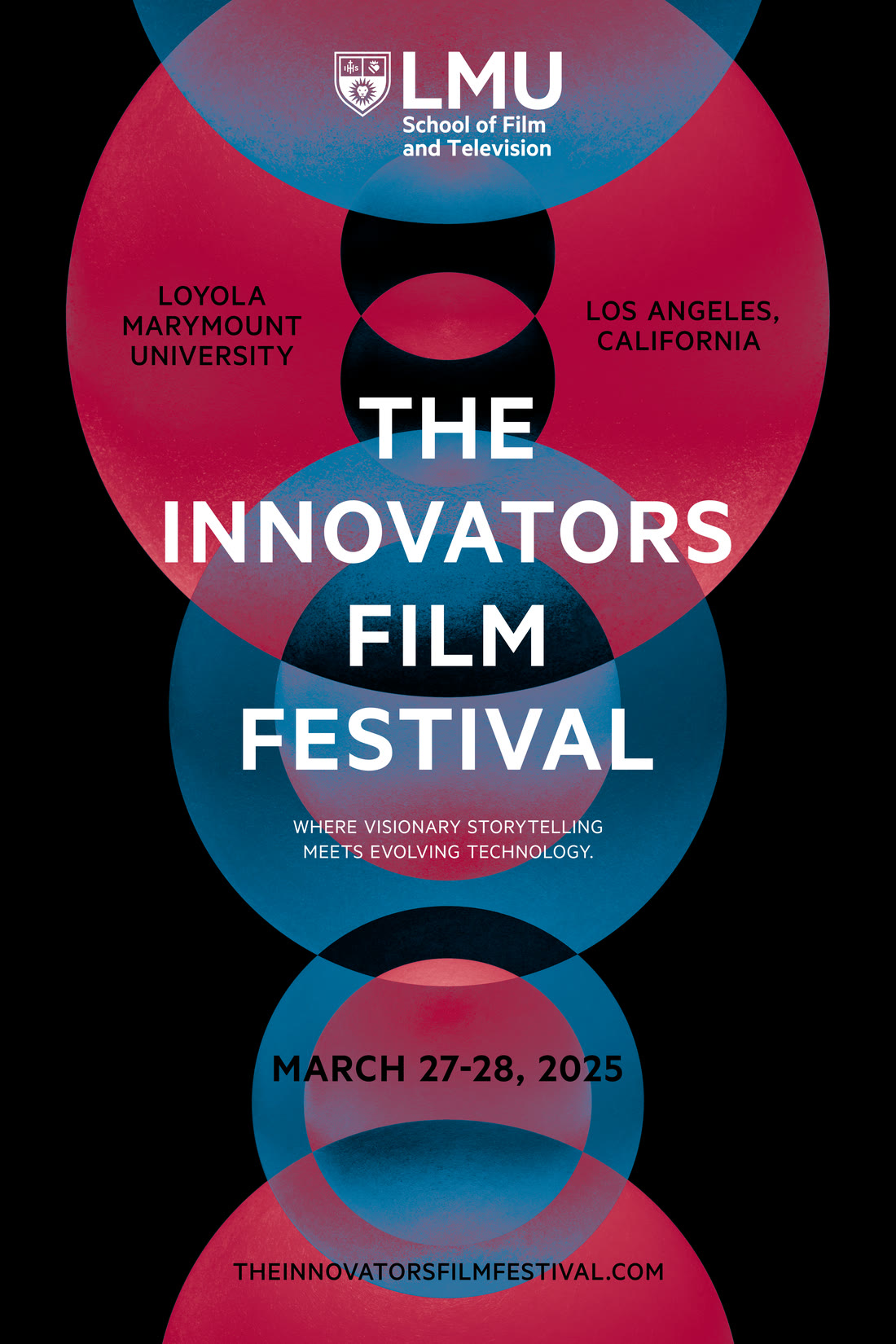
The teaser, key art, and event photography shown here are the final festival creative, drawn from the festival archive.